

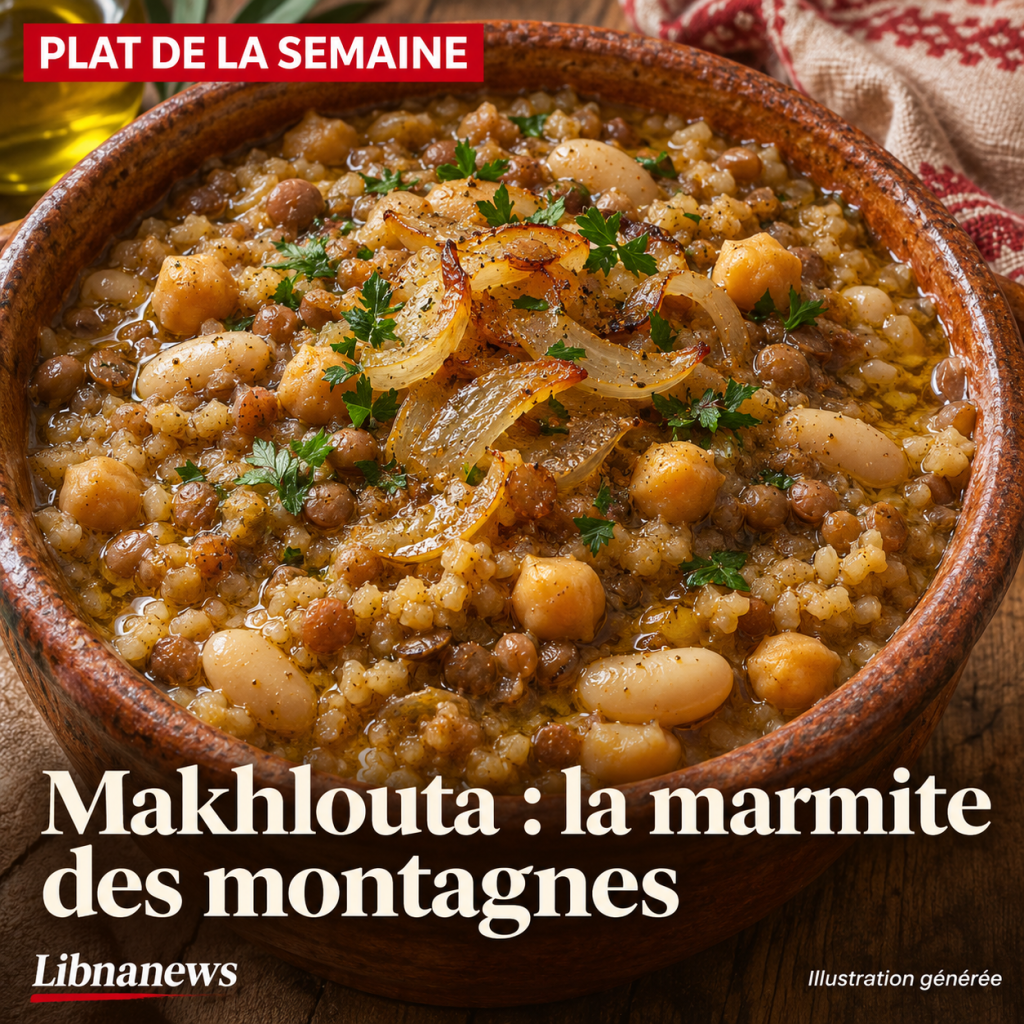
The makhlouta gathers lentils, beans, chickpeas and cereals in the same pot. This traditional Lebanese dish, especially associated with mountain villages and winter meals, is not based on a unique composition. His name announces the principle: a mixture. For this event of the week’s dish, here are its documented variants and a family recipe for six people, with legumes already cooked to control the preparation times.
A transmission story, not a birth date
It would be imprudent to attribute the creation of the makhlouta to a specific village or at a specific time. The evidence available mainly describes intergenerationally transmitted family practices. They allow the dish to be placed in Lebanese cuisine, without establishing a birth certificate or national exclusivity.
A marker is, however, well documented. On 7 December 2014, a cooking session filmed in Beirut gathered the expertise of Halime el Houjeiri, from Ersal. She prepared her region’s makhlouta with chickpeas, beans, lentils, bulgur, potatoes and onions. In this version, the ingredients cook without prior passage to the pan. Salt and olive oil are sufficient for seasoning.
The cook connects this learning to her mother and grandmother. His testimony describes a winter dish, also consumed during fasting periods. This story informs a local and family tradition; It does not mean that each Ersal home follows exactly the same proportions.
From the mountain to the family kitchen, several makhloutas
The variety of recipes is constitutive of the dish. A heritage preparation combines legumes with bulgur, cumin and kawarma, a meat preserved in its fat. The onions returned before joining the pot. This version reminds us that makhlouta is not necessarily vegetarian, even if it lends itself very well to an entirely vegetable preparation.
Another formula, presented as a Baskinta specialty, combines brown lentils, rice, bulgur, white and red beans, beans and chickpeas. Tomato concentrate brings color and mild acidity. Olive oil comes at the time of service. This contemporary regional presentation is not enough to make Baskinta the place of invention of the dish.
Family choices therefore cover several elements: the number of legumes, the presence of rice or potatoes, boiled or golden onions, and the possible addition of meat. Seven ingredients are not needed to obtain a makhlouta. Better is a coherent mixture, each of which is well cooked, than an accumulation of still firm grains.
The recipe: a makhlouta for six people
The version proposed here is a domestic plant adaptation, not the exact reproduction of Ersal’s recipe. It favours beans and chickpeas already cooked, then cooks lentils and bulgur in the same pot. Count about 20 minutes of preparation and 45 to 55 minutes of cooking, depending on the lens and texture desired.
- 300 g of cooked and drained chickpeas;
- 300 g of cooked and drained white beans;
- 180 g dry brown or green lentils;
- 100 g of bulk bulgur;
- 2 large onions, about 350 g in total;
- 4 tablespoons of olive oil, about 60 ml;
- 1.5 litres of hot water at the start, then a little more if necessary;
- 1 teaspoon of ground cumin, optional;
- 1⁄2 teaspoon of pepper;
- 1 teaspoon of salt at the start, to be adjusted after tasting;
- A little chiseled parsley, optional, for service.
The weights of beans and chickpeas correspond to the drained product, not the total weight of the boxes. If these vegetables are already salty, reduce the initial salt. The bulgur being wheat, this recipe contains gluten.
1. Prepare ingredients
Sort and rinse the lentils. Rinse the bulgur briefly in a thin colander. Drain and rinse the beans and chickpeas. Peel the onions and slice them. Keep a small handful of slats apart if you want a golden onion garnish.
2. Build onion base
Heat three tablespoons of oil in a large saucepan with thick bottom. Add the onions and cook over medium heat for 12 to 15 minutes. Move regularly. They must become soft and slightly golden, without blackening. This step gives our version its more marked taste of cooked onions.
3. Cook the lentils before mixing
Pour the lentils and hot water. Bring to a boil, then lower the heat. Let simmer for about 20 minutes, partially covered. Taste a lens: it must begin to soften, without necessarily being completely cooked. Extend this first phase if it remains harsh.
4. Add cereals and cooked vegetables
Add the bulgur, beans and chickpeas. Add cumin if you use pepper and salt. Simmer an additional 15 to 20 minutes. Move to the bottom to prevent the grains from fastening. Pour a little hot water if the mixture becomes too thick before the lenses and the bulgur are tender.
5. Adjust consistency and serve
Crush one or two spoonfuls of beans against the wall, then mix: they thicken the broth without turning the whole dish into puree. Taste and grind seasoning. Cut the heat, let stand for five minutes, then add the last oil spoon. Serve hot, with the onions reserved previously golden apart and, if desired, some parsley.
Change the mix without losing the recipe thread
Already cooked red beans can replace whites with the same weight. For a closer consistency to a soup, add hot water at the end of cooking. For a denser pot, simmer for a few minutes without a lid stirring. The rest also thickens the dish: it must be taken into account before reducing the liquid too much.
Dry legumes require another organization. Soak them and cook separately until they are tender, then weigh the necessary cooked quantities. Do not replace 300 g of cooked beans directly by 300 g of dry beans. The time and water requirements would be very different. At the table, success is recognized by soft grains, still identifiable, gathered by a bound broth rather than drowned in oil.





Comments