

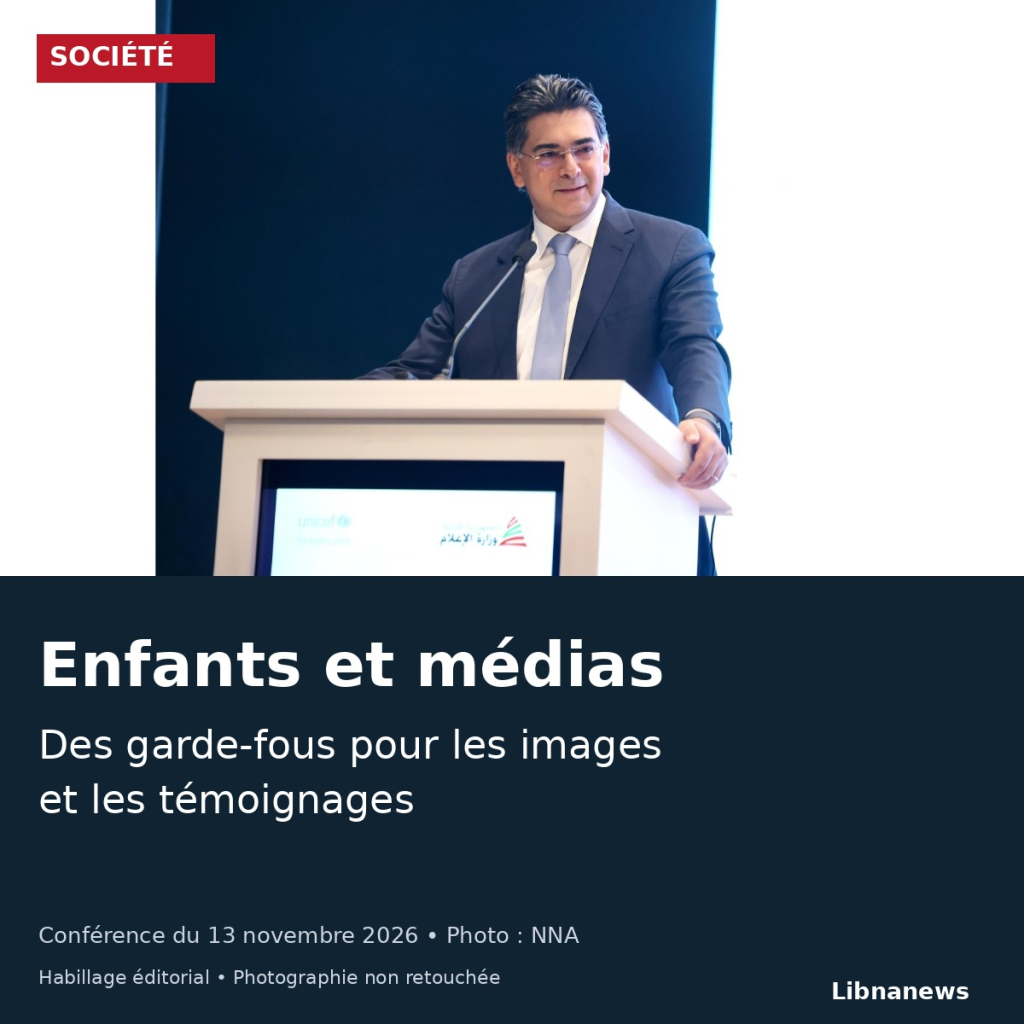
The protection of children in the media was at the heart of a national conference organised on 13 November by UNICEF, the Ministry of Information and the United Nations Information Centre in Beirut. The organizers presented practical resources for interviews, images and confidentiality. They also launched an initiative for professionals in 2027. Minister Paul Morcos announced a next prevention campaign on Internet use.
The meeting, entitled « Media and Children’s Rights: Partnership and Responsibility », took place before World Children’s Day on 20 November. It brought together public officials, journalists, students and content creators. Participants included Christophe Boulierac, UNICEF Acting Representative in Lebanon, and Elissar Naddaf, head of Télé Liban.
Children in the Media: Writing Tools
The resources presented cover four concrete aspects of journalistic work: interviewing a child, organizing his/her participation without endangering him/her, protecting his/her identity and respecting his/her dignity in images. They concern both the preparation of the report and the choices made when it was broadcast.
Christophe Boulierac highlighted the gap between the speed of an editorial decision and the duration of its consequences. Choosing a photograph, remembering a detail or asking a question can engage a child’s life far beyond reporting. He has defended a shared responsibility between the media, public institutions and universities, without including this protection as censorship.
In particular, the exchanges addressed the coverage of emergency situations. A first aspect was the reconciliation between the public interest and the safety of children. Another examined their participation in the information: giving them a place and a voice, rather than reducing them to images of victims.
The initiative « Media Pioneers for the Rights of the Child », announced in 2027, should extend this cooperation with journalists and the media. It aims to promote professional practices that respect the rights of the child.
An identity can be unnamed
UNICEF’s general principles already address these issues. They place the child’s interest before looking for a story or an image. Hide a name is not always enough: a background, a place or indications about the family can allow identification.
For an interview, the organisation recommends explaining the purpose of the report and the intended use of the comments. She asks for the agreement of the child and his or her manager, without pressure, in a language they understand. She advises against issues that may rekindle trauma and staging.
These recommendations also provide for the waiver of individual testimony when the publication exposes the child or his or her relatives. The journalist can then deal with the general situation. These pre-existing professional principles inform the tools presented in Beirut; they are not a new law adopted at the conference.
An Internet campaign announced for November
Paul Morcos announced that his ministry, together with UNICEF and the public and private media, was preparing a preventive programme for a more prudent use of the Internet. It has located its launch in the coming days, around November 20th. The announcement concerns awareness-raising, not a ban on access already in force.
The Minister also referred to the work of a national commission constituted by a government decision of 26 February. The Commission is preparing a plan combining measures, programmes and legislation. This preparation remains separate from editorial recommendations to professionals.
The Ministry and UNICEF had already strengthened their cooperation with public television in January 2026. The partnership announced on 26 January combined support for the broadcast of Télé Liban with the production of content for young people and better consideration of their rights. The 13 November conference extends this work to the practices of journalists and content creators.





Comments