




Alex Fghali wins Spring Rally
Alex Fghali and Joseph Matar won the 41st Spring Rally on Skoda Fabia RS, after a race organized by ATCL in Jbeil and Kesrouan. Bassel Abu Hamdan finished second at 14.4 seconds, ahead of Elias Dehni. The race turned after a three-minute penalty imposed on Roger Fghali, who had several better times, for early entry into the third stage.

Lebanese Taekwondo: Raad bronze in Luxembourg
Charbel Raad offers the Lebanese taekwondo bronze at the Luxembourg International Open, with Mark and Peter Zarifeh engaged.

Lebanon faces the risk of targeted drug ruptures
Medicines in Lebanon remain available, but war, transport costs and rising consumption are weakening the market.

Laetitia Aoun targets Asian Games
Laetitia Aoun validated her qualification for the Asian Games 2026 in Japan after reaching the quarter finals of the Asian Taekwondo Championships in Ulaanbaatar, Mongolia, in the category of less than 57 kg. Guided by Grand Master Elijah, the Lebanese champion confirmed her position after her Olympic race in Paris 2024. The Lebanese Taekwondo Federation is now preparing a specific programme before Aichi-Nagoya.

Marriage in Lebanon: the age is falling again
Marriage in Lebanon now occurs at very high ages, with 34.4 years for men and 30.4 years for women in comparable international data. This brings the country closer to Western Europe, but above all reflects a deep economic and social crisis. Inaccessible housing, unstable wages, destroyed savings, youth unemployment, emigration, long-term studies and absence of local civil marriage push back the family settlement.

Elias Hoyek soon beatified
Pope Leo XIV authorized the promulgation of a decree recognizing a miracle attributed to the intercession of Elias Hoyek, former Maronite patriarch and founding figure of Greater Lebanon. This decision paves the way for its beatification. The miracle concerns Nayef Abu Assi, Druze officer of the Lebanese army. In Lebanon, the announcement causes religious joy and a national echo, as Hoyek's name remains linked to the unity, coexistence and birth of modern Lebanon.
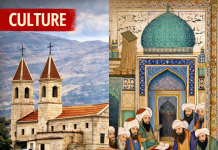
How southern Lebanon weighed on the birth of Shiite Iran
Iran did not become Shiite by mere missionaries from southern Lebanon. But the Jabal Amel has provided the Safavids with scientists, lawyers and doctrinal cadres essential to transforming a state decision into a lasting religious order. A more complex, political and fascinating story than the slogan.
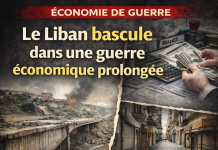
Lebanon in a protracted war economy
In Lebanon, war no longer destroys only roads, bridges or houses. It reprograms the entire economy around urgency, short term and survival. Emergency aid, frozen investments, partial returns and exsanguated public finances are now drawing up a genuine prolonged war economy in the country.
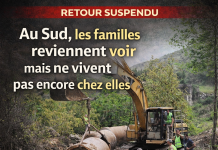
Return without coming back: the families of the South between two lives
In southern Lebanon, the ceasefire has not yet allowed a real return. Families return to their homes, control the damage, and then return to their temporary homes. Between repaired roads, reopened bridges and fear of a resumption of fighting, they now live between two lives, without being able to resettle permanently at home.

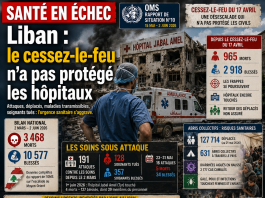
WHO warns about exhaustion of medical stocks in Lebanon
The World Health Organization warns about the critical state of the hospital system in Lebanon. At its site, the institution states that access to essential care is increasingly under threat, that several hospitals have been closed or damaged, and that critical stocks need to be replenished urgently to avoid shortages and interruptions of treatment. If the exact formula on a lack of supplies "in the next few days" has not been found as such, the background of the alert is well present in the official WHO documents

Mission Moon: Artemis II took off
Moon mission: Artemis II took off, re-launching manned flights to the Moon for the first time in over 50 years.
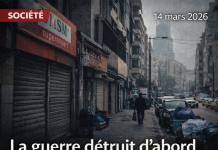
Traders, families, services: war first destroys daily savings
In Lebanon, war begins with the daily economy. Local businesses, displaced families and essential services suffer from the immediate effects of escalation. With more than 800,000 displaced persons and saturated services, the crisis not only destroys infrastructure: it breaks the ordinary economic circuits that hold society.

Lebanon rose to 162nd place on women’s economic rights in 2026
Lebanon has won six places in the World Bank's 2026 global ranking on women's economic rights, but its score of 46.8 out of 100 for the legal pillar remains well below the world average. The country appears particularly weak on support frameworks and on the effective application of the rules. This gap between written law, institutions and economic reality limits women's autonomy and hinders productive potential.
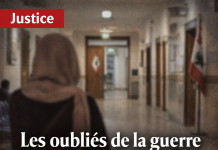
The forgotten of war: detainees, families and the right to a reply
In Lebanon at war, detainees and families become the forgotten of an emergency saturated by strikes and diplomacy. Between institutional silence, endless expectation and the recurring issue of the general amnesty, their fate reveals the fragility of the state, justice and the right to a clear response.



