

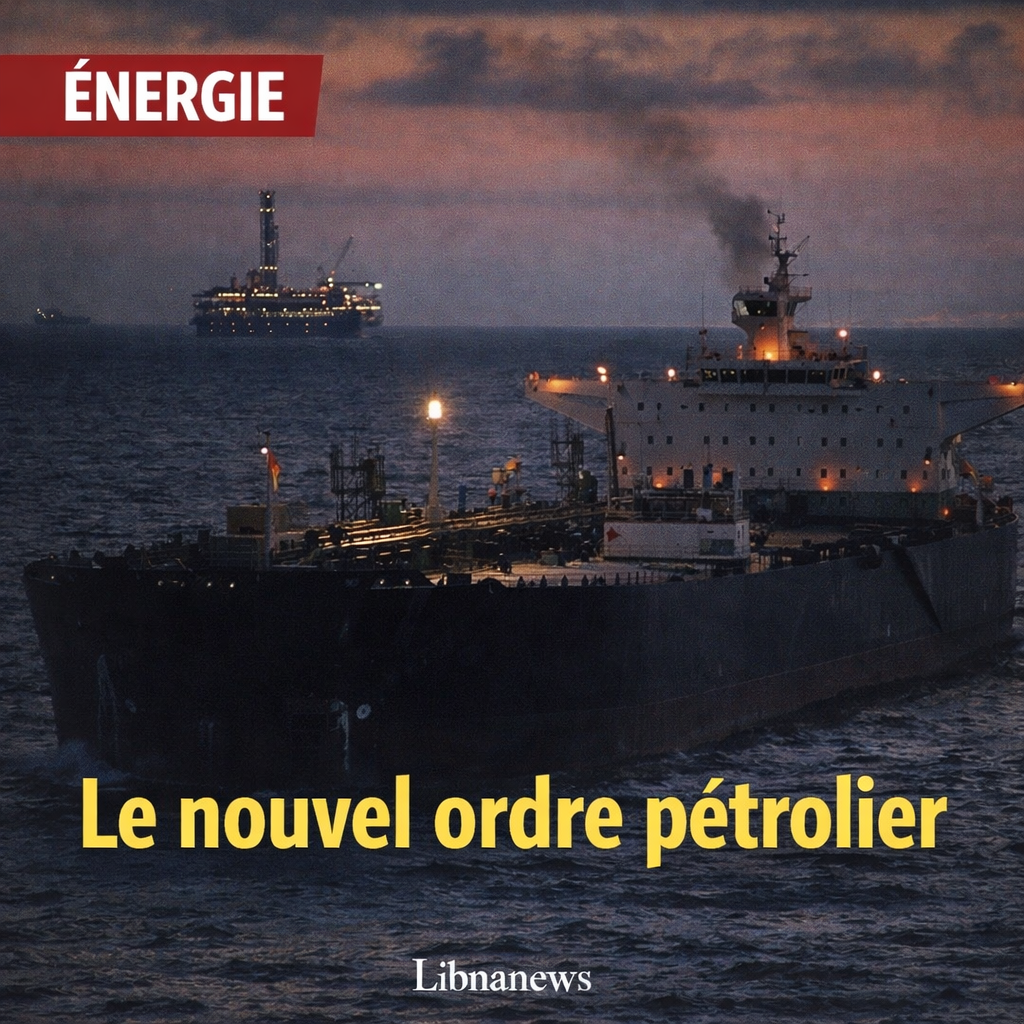
The war started around Iran not only causes a short-term outbreak on the barrel. It acts as a historical accelerator. In a few weeks, the world oil market, long organized around massive, liquid and relatively predictable flows, has entered a more political, fragmented and costly phase. The Ormuz Strait, through which nearly a fifth of the world’s oil supply flows, remains at the heart of this shift. Since 28 February, its de facto closure has reduced supplies, disrupted shipping and resettled a sustainable risk premium in energy prices. The shock now exceeds the only oil sphere. It affects inflation expectations, industrial arbitrage, public finances and, ultimately, the international monetary architecture.
What is being played is therefore not a classic episode of geopolitical tension in the Middle East. The conflict pushes governments, oil companies, traders and shipowners to review their mind maps. Even with a truce, flows do not return instantly to normal. Reuters reported on 9 April that traffic in the Strait remained below 10 per cent of normal volumes, with only seven vessels recorded over 24 hours, compared to about 140 in normal times. At the same time, physical shipments outside the Middle East have reached record levels, indicating that Asian and European refiners are already looking for replacement barrels. In other words, the market does not wait for the official end of the crisis to reorganize. He’s starting to re-design under duress.
The Strait of Ormuz returns to the nervous center of the system
The Strait of Ormuz is not a simple maritime route. This is the connecting point between the major Gulf producers and the main Asian and European consumer centres. The US Energy Information Agency recalls that this is the world’s main oil bottleneck. In its latest update, the institution points out that almost 20% of the world’s oil supply is still transiting there. To this is added an essential part of the world trade in liquefied natural gas, particularly from Qatar. When this artery slows down, it is not only the volumes that are missing. Insurance costs are increasing, journeys are increasing, purchasing decisions are frozen and visibility disappears.
The current blockage has this particular feature. It is not based on a net and total administrative closure, but on de facto paralysis. Ships are slowed down, redirected or discouraged. Shipowners wait, charterers renegotiate, brokers reassess the risk hour by hour. Reuters noted on 9 April that Iran required vessels to sail in some territorial waters around Larak Island, in an environment marked by the threat of mines and targeted restrictions. This creates an even more corrosive uncertainty than a formal closure, as it prevents actors from building stable scenarios. Trade can theoretically resume, but under political, financial and security conditions so degraded that it already functions as a war market.
The price of crude oil reflects this nervousness, but imperfectly. In the futures market, the cease-fire announcements led to brutal corrections. On the physical market, on the other hand, tension has not eased. European and African crude qualities have exchanged at record levels because buyers want barrels immediately available and less exposed to the Gulf zone. This gap between « paper » and « physical » speaks volumes about the depth of the crisis. Operators no longer rely solely on an abstract geopolitical premium. They incorporate a concrete shortage of flows, longer logistical delays and industrial restarts that have been delayed by several weeks or even months.
A more expensive, regionalised and political oil market
The first consequence of the shock is simple: oil costs more. But the second is more structuring: it negotiates differently. In a fluid market, a refiner easily replaces a missing barrel with another. In a fractured market, each origin has a different strategic value. A Norwegian, American, Brazilian or Angolan crude is no longer only compared on its quality or price. It is assessed on the basis of its transport security, geographical proximity, contractual flexibility and exposure to military risk. This new hierarchy promotes local supplies, bilateral agreements, state-guaranteed cargo and long-term contracts. It penalises, on the other hand, the open and anonymous spot market that has long served as a global regulator.
This regionalisation can become sustainable. The pandemic had already encouraged industrial relocation. The war in Ukraine had led Europe to reduce its dependence on Russian gas and to sign alternative contracts as a matter of urgency. The conflict around Iran adds a third layer: energy security becomes again a primary criterion, sometimes in front of the price. This shift is not marginal. It changes the way States design strategic stocks, terminals, refineries and sea routes. It also strengthens the power of those who control bypass infrastructures: off-Gulf pipelines, storage capacities, national fleets, deep-sea ports. Clearly, the global economy is returning to a logic of energy blocks.
Changes already visible
- rise in bilateral contracts and security clauses in crude oil sales;
- strengthening strategic stocks in importing countries;
- increased exploitation of producers outside the Gulf, from the North Sea to the Americas;
- sustainable increase in insurance, freight and financing premiums;
- Accelerating investment in alternative roads, pipelines and LNG terminals.
Each of these trends has a cost. And this cost always ends up either in the energy bills of households, in the margins of companies or in public budgets.
The return of the inflationary shock
The International Monetary Fund has already set the tone. Kristalina Georgieva warned that « all roads now lead to higher prices and lower growth. » The IMF plans to lower its global growth forecasts and raise its inflation expectations. The reasoning is classic, but brutal: a world economy that pays its more expensive energy produces less at the same cost. Importing countries are seeing their external bills grow stronger, their currencies become softer and their central banks face a dilemma. Should inflation be combated by raising rates, at the risk of strangling an already weakened activity, or supporting demand, at the risk of maintaining price increases?
The impact does not stop at the tank or heating bill. Oil irrigates the entire productive chain. It affects maritime, road and air transport. It influences the costs of petrochemicals, fertilizers, packaging and part of manufacturing. Reuters also pointed out that the war already had cascade effects on gas, helium and fertilizers. In this type of sequence, inflation is not just energy. It gradually becomes diffuse. Food goods, logistics services, airline tickets and then consumer prices go up one after the other. Governments can cushion some of the shock, but rarely completely cancel it.
The precedent of the 1970s remains in all minds for this very reason. An oil shock not only transforms price indices. It changes behavior. It encourages companies to invest in efficiency, households to arbitrate their travel, central banks to redefine their priorities. The United States had eventually adopted more compact vehicles, Europe was rethinking its energy saving policies, and Japan was strengthening its industrial sobriety. If the blockade of Ormuz is sustainable, the world could experience a new wave of comparable adjustments, in a more technological form: faster electrification, sobriety imposed, accelerated diversification of suppliers, return of discussions on security of supply.
The dollar in the center, but also under pressure
Perhaps the most sensitive dimension of the shock is monetary. For decades, oil has traded heavily in dollars. This choice is not neutral. It feeds global demand for U.S. currency, supports the depth of U.S. financial markets, and promotes the recycling of « petrodollars » to public debt and dollar-denominated assets. The Bank for International Settlements recalls that large oil exporters have long expressed their sales in dollars and reinvested part of these revenues in U.S. Treasury bills and other U.S. assets. This mechanism has strengthened the status of the dollar in world trade and finance.
However, a more fragmented oil market could crack this architecture at the margin. Not because the dollar will lose its central status tomorrow, but because incentives to bypass traditional channels increase in times of war and sanctions. The more energy trade becomes politicized, the more certain states seek settlement in local currencies, alternative clearing schemes or bank-backed agreements that are less exposed to Western sanctions. The simple fact that this research is intensifying signals an evolution. In an open universe, monetary uniformity is effective. In a fragmented universe, redundancy becomes an assurance.
So the problem for Washington is twofold. In the short term, the oil shock further reinforces the security reflex towards US assets. In the medium term, the militarization of flows and payments can accelerate diversification efforts in several emerging powers. This movement does not reverse the monetary order overnight. It erods in successive layers. A larger share of non-dollar energy trade, more diversified reserves and parallel payment infrastructure would gradually reduce the strategic advantage that the United States derives from the centrality of its currency. That is precisely what gives the current conflict a scope that exceeds the barrel alone.
A Recomposition of US Power
The comparison with Suez is insistent in several strategic debates. In 1956, the canal crisis highlighted the British decline and confirmed that London no longer had the means to act as an independent imperial power. The Imperial War Museums recalls that its outcome emphasized the loss of status of the United Kingdom and confirmed as second-class power. Transposition to the US case should be handled with caution. The United States has military, financial and technological power with no British equivalent at the time. But the comparison points to a real risk: that of a war that reveals less the strength of a hegemon than the increasing cost of its role as guarantor of world order.
For years, Washington has been defending freedom of navigation in the major maritime arteries. While the Strait of Ormuz can be permanently paralyzed despite this role, the message sent to the rest of the world is heavy. He suggests that energy road protection becomes more expensive, more contested and less automatic. Asian and European allies are already drawing conclusions. They diversify their suppliers, strengthen their naval capabilities, discuss escort mechanisms and consider industrial policies less dependent on vulnerable chains. This is not necessarily the sign of an American withdrawal. It is that of a more conflicting sharing of the cost of security.
In this context, American power can paradoxically appear both indispensable and relative. Indispensable, because no other actor today offers the same military and financial depth. Relative, because it is no longer enough to prevent fragmentation. The post-war oil order was based on an implicit promise: flows flow, markets absorb shocks, the dollar organizes settlements and US power guarantees the whole. The current conflict cracks these four pillars at the same time. He doesn’t destroy them. It makes them more expensive, more visible and more contested.
Winners, losers and future arbitrations
Not all actors will lose out on a new oil order. Producers with safer roads or more flexible exports will see their strategic value rise. The United States can benefit in part from an increased role for its energy exports. Producers in the North Sea, West Africa or Latin America gain in attraction when the Gulf barrels become more risky. Transport, insurance and security companies can also collect part of the crisis pension. But these gains remain concentrated. The overall cost is spread everywhere.
For importing countries, the bill will be heavy. European and Asian economies, which are highly exposed to oil imports, will have to balance support for purchasing power, fiscal discipline and industrial competitiveness. Poor countries, which already spend a high share of their currencies on energy and food, appear to be the most vulnerable. IMF warned that states without energy reserves and with little fiscal margin would be hardest hit. In several regions, rising fuel costs can quickly become a major social and political issue.
Summary table
| Effect | Immediate consequence | Probable lasting effect |
|---|---|---|
| Blocking of Ormuz | decrease in flows, flight of freight | redrawing energy roads |
| Increased barrel | Imported inflation | pressure on global growth |
| Stress on physics | rush to alternative barrels | regionalisation of supply |
| Geopolitical risk | insurance and safety premium | more political and less open contracts |
| Fragmentation of payments | search for alternative circuits | gradual erosion of the centrality of the dollar |
This table does not describe a completed rupture. It shows a direction. Major crises do not always herald a new world the same day. They first move behaviour, contracts and investments. Then they transform institutions. The oil market is entering precisely this grey area where short-term reflexes are already preparing a change of era.




