





A raid at the worst diplomatic moment
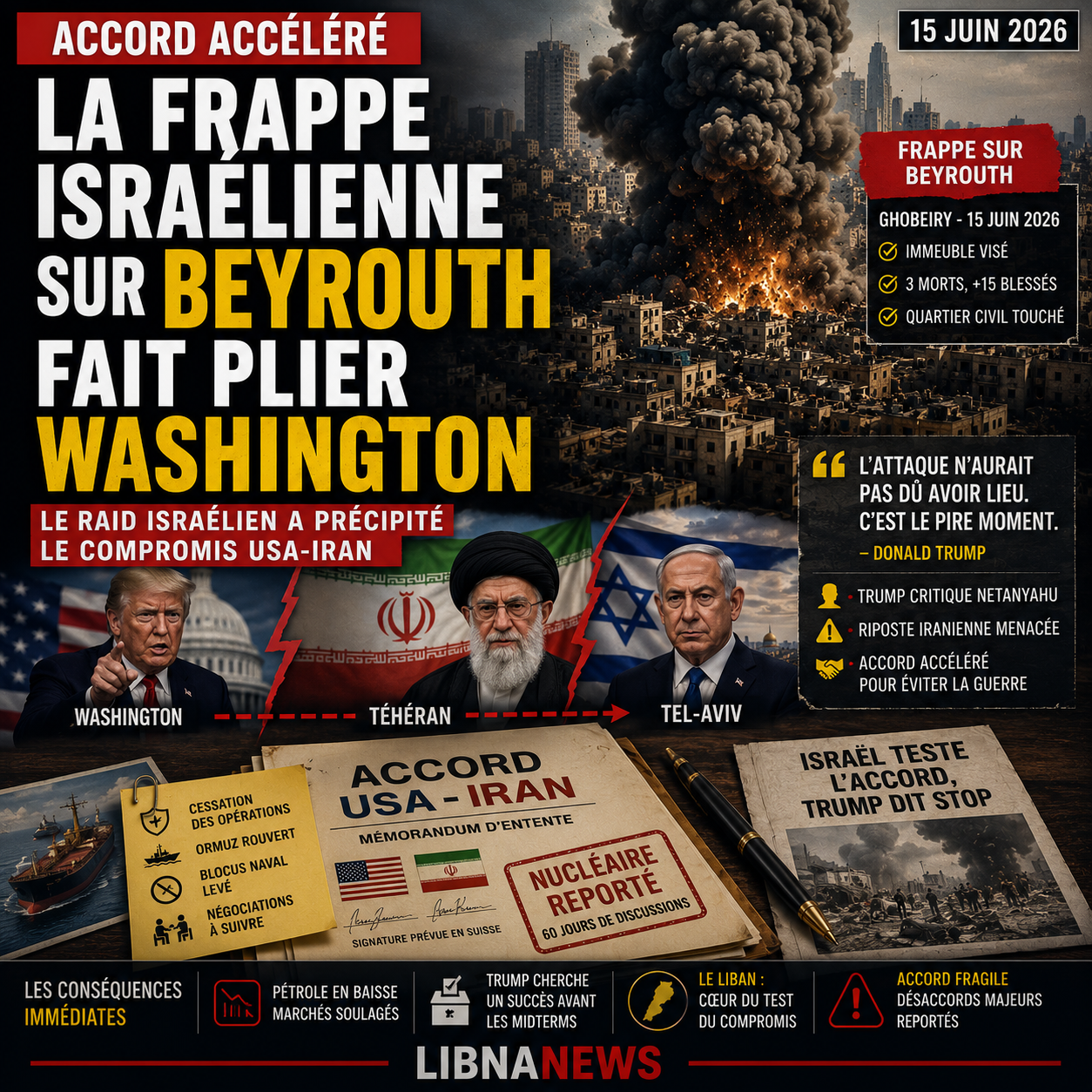
The Israeli strike on Beirut, carried out just a few hours before the announcement of an agreement between Washington and Tehran, played the role of a brutal accelerator. She recalled that the Lebanese front was not a secondary theatre, but the point where the conflicting priorities of Israel, the United States and Iran intersect. In an attempt to impose its military pace, the Israeli government threatened with Iranian reprisals and placed Donald Trump at an immediate risk: for an operation in Beirut, a negotiation designed to bring the United States out of a war that had become costly, unpopular and inflationary.
The episode is all the more significant as several central issues of the American-Iranian iron arm have not been resolved. Iranian nuclear, enriched uranium stocks, inspections, sanctions and the ballistic programme must be discussed at a later stage. The memorandum announced in the night therefore comes first to an emergency stop. He doesn’t close the dispute. It suspends climbing. This new hierarchy reflects political pressure: Donald Trump wanted to prevent an Iranian response, reopen Ormuz, calm markets and prevent Benjamin Netanyahu from driving Washington into an extension of the war.
Israeli strike on Beirut as accelerator
The raid on Beirut struck a specific diplomatic moment. Negotiators had already reduced the agreement to a minimum: cessation of operations, reopening of the Strait of Ormuz, lifting of the US naval blockade against Iranian ports and future discussions for sixty days. In that calendar, any major attack on Lebanon could be read in Tehran as an Israeli attempt to sabotage the signature. This is exactly the interpretation given by several Iranian officials, who accused the United States of not controlling its ally or of playing some form of role distribution.
The White House could not let this accusation prosper without reacting. Trump therefore chose to criticize Israel publicly, and then to make known his irritation against Netanyahu. According to an American media outlet, he found that the attack should not have taken place at that time and considered that the Israeli Prime Minister had failed to discern. The word struck with its hardness. It was no longer a blurred divergence between allies. It was a direct reproach, expressed as Washington was trying to save an agreement that the Israeli operation had just weakened.
This anger is explained by the sequence itself. Israel presented the strike as a response to a Hezbollah attack on northern territory. The US authorities have not denied Israel’s right to defend itself. But Trump insisted on the political disproportion of the moment. He stressed that the initial attack from Lebanon had not caused major damage or death. In his view, the Israeli response was likely to produce a much higher strategic cost than the military damage it claimed to be responsible for.
The result was paradoxical. In striking Beirut, Israel may have wished to recall that no agreement between Washington and Tehran could limit its freedom of action in Lebanon. But the immediate effect was reversed. Iran raised the tone. Trump has accelerated the conclusion of the compromise. The most difficult points were rejected. The emergency was no longer to settle the entire Iranian case, but to prevent the Beirut raid from triggering a cycle of reprisals. The Israeli strike thus helped to make the United States bend on the calendar, if not on all terms.
Nuclear back to later
The expression must be handled accurately. Washington has not officially given up preventing Iran from gaining access to nuclear weapons. Trump continues to affirm that Tehran must never possess such a capacity. American officials are always referring to the destruction or disposal of sensitive nuclear material. But in the announced text, this issue no longer appears as an immediate precondition for de-escalation. It becomes a file of the next phase. For Iran, this is a tactical victory. For Israel, this is a worrying step backwards. For Trump, this is the price of a crisis exit before the mid-term elections.
Ormuz Strait also explains this precipitation. Its de facto closure, the risks to shipping and the American blockade of Iranian ports fueled the nervousness of energy markets. The prospect of a reopening has sufficed to lower oil prices and raise Asian stock markets. In an American election year, this effect counts. The war against Iran weighs on gas prices, inflation expectations and household confidence. Trump could not let a strike in Beirut question the main political benefit expected from the agreement.
France and Europeans immediately put Ormuz back at the centre of the debate. Paris welcomed the agreement, but called for a rapid, unconditional reopening without restrictions and without tolls. This clarification applies to both Iran and the United States. It recalls that the passage is not only a lever for bilateral negotiations. It commits world trade, European energy supply and the credibility of maritime law. The French message is clear: de-escalation cannot create a new form of Iranian control over traffic.
Lebanon, the dead end or the heart of compromise
Lebanon remains the other major ambiguity. According to the Iranian and Pakistani reading, the agreement provides for the immediate and permanent cessation of operations on all fronts, including in Lebanon. This formulation directly meets Tehran’s requirements. It protects its Lebanese ally from too narrow a interpretation of the ceasefire. It also prevents Israel from continuing its operations as if the Lebanese front were outside the compromise. But Trump, in his initial announcements, talked about Ormuz and the end of the blockade. This relative silence maintains a grey area.
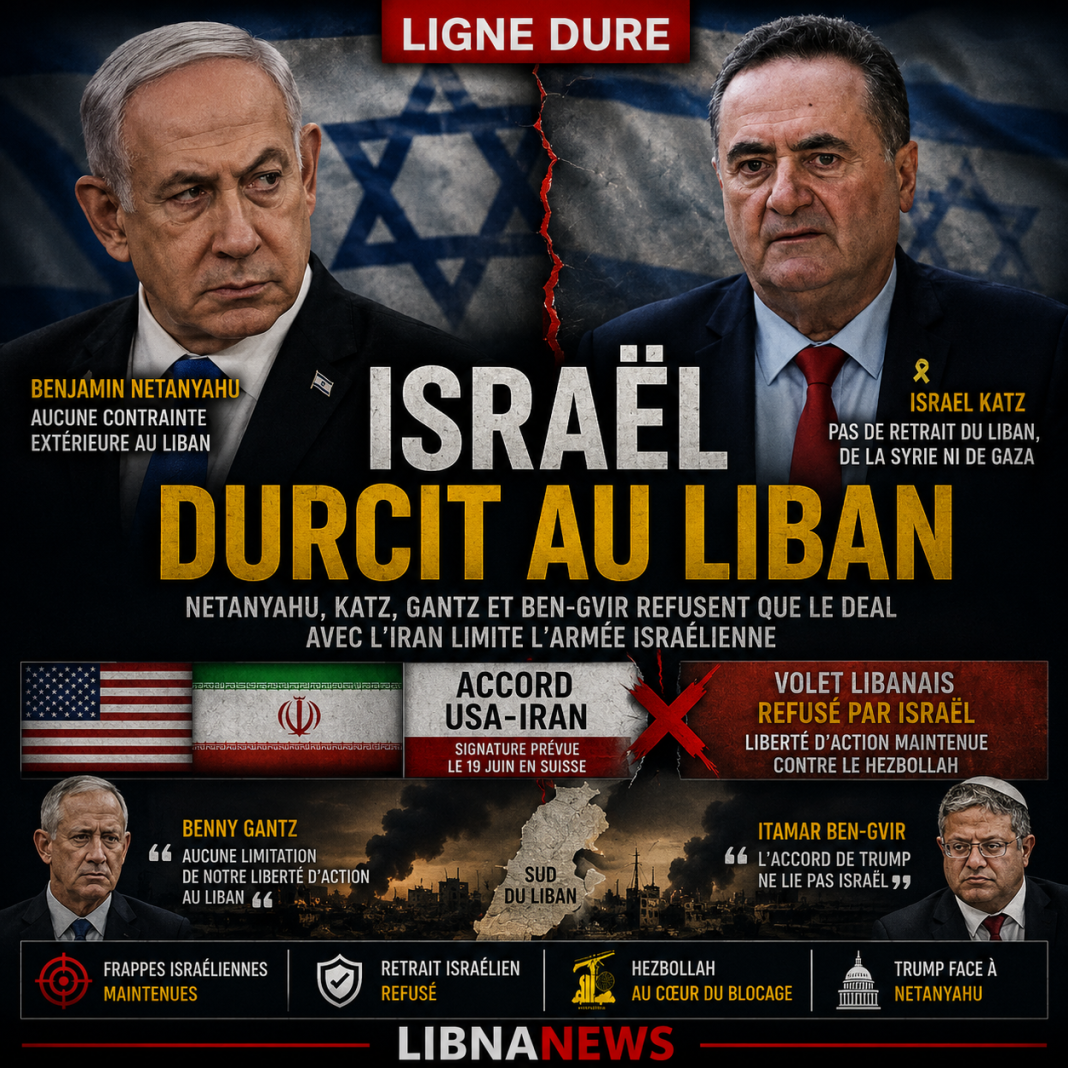
Israel has always sought to preserve this grey area. For months, its officials claim that they will not give up hitting Hezbollah in Lebanon if a threat is identified. They also defend a military presence or a margin of action in certain border areas, in the name of security in northern Israel. Iran refuses this logic because it would empty the agreement of its substance for one of its main regional allies. Hezbollah also refuses any de-escalation that would leave Israel free to bomb Lebanese territory while demanding the silence of the northern front.
That is why the strike on Beirut had a greater reach than its immediate military objective. She asked a simple question: does the American-Iranian agreement involve Israel in Lebanon, or does it concern only Washington and Tehran? If Israel can continue to strike Beirut, Iran will be able to claim that the United States has not fulfilled its commitments. If Washington imposes Israeli restraint, Netanyahu will have to explain to him that an agreement in which Israel has not participated now limits its action. The raid therefore exposed the main flaw of the memorandum.
Netanyahu and Trump face two opposing opinions
This flaw is part of a deeper political divergence. Netanyahu is entering a difficult electoral period. In Israel, a significant part of the opinion remains in favour of continuing operations against Iran, Hezbollah and other Tehran allies. The Prime Minister built his political survival on the idea of a necessary war and a total victory still possible. He cannot appear as the leader who accepts an American compromise leaving Iran standing, his uranium under discussion and Hezbollah still present in Lebanon.
Trump faces an opposite constraint. In the United States, war with Iran has become an internal burden. Available surveys show a majority disapproval of the military campaign and a strong concern about fuel prices. Inflation, energy costs and the prospect of mid-term elections are weighing on White House calculations. For the US President, prolonging the war to meet Israeli demands can become more politically dangerous than accepting an incomplete agreement.
This asymmetry explains the current crisis between the two leaders. Netanyahu better show that he’s not being locked up by Washington. Trump better show that he is not being dragged by Israel. One speaks to an opinion mobilized by the security threat. The other talks to an electorate who first judge the price of gasoline, the cost of living and the promise not to enshrine the United States in a new war in the Middle East. The raid on Beirut turned this divergence into an open confrontation.
A broader American opposition than the Democratic Camp
The American opposition to the war is not just from the Democratic Camp. It also crosses part of the Republican coalition. The isolationist voters, a fringe of the MAGA movement and several midterm-conscious elected officials fear that Iran will become a new conflict without a clear horizon. Price increases give this criticism immediate effectiveness. As long as the war remained presented as a short operation, Trump could defend it. After months of tension, energy disruption and regional risks, the argument becomes more difficult to maintain.
In this context, the Israeli attitude appears in Washington as an imposed risk-taking. The last major phase of the war began with Israeli-American strikes against Iran at the end of February. On 2 March, for the Lebanese front, entered a wider sequence, with the resumption of Hezbollah attacks after two days of operations against Iran. As a result, Israel has sought to maintain the military initiative, while the United States has gradually come to bear the economic, diplomatic and political costs of regional escalation.
The Beirut raid revived this grievance. In Trump’s eyes, Netanyahu shoots the rope every time a diplomatic window opens. A strike in Beirut can be militarily justified by Israel. But it can also ruin a negotiation that Washington has built with several mediators and that meets unique American imperatives. This difference in perspective is now public. It weakens Israel’s ability to present its choices as automatically aligned with the strategic interest of the United States.
The American choice: stop first, negotiate then
The announced agreement therefore translates an American focus. Washington does not break with Israel. It does not recognize Iranian positions in their entirety. He doesn’t give up discussing nuclear power. But it imposes a priority: stop climbing now and treat the rest then. It’s a political choice. It is clear that the immediate risk is no longer confined to Iran’s nuclear programme, but rather to the possibility that a regional ally might provoke a response that the United States should then manage.
This choice involves a cost. By pushing back key issues, the agreement creates a 60-day period for everyone to claim victory. Iran claims to have resisted, obtained the lifting of the blockade, reopened Ormuz under its conditions and prevented the exclusion of Lebanon. Trump will say that he brought calm back, lowered oil and opened a nuclear negotiation. Israel will say that it remains free to defend itself, especially if the final text does not provide for a robust mechanism in Lebanon. This plurality of readings can stabilize a few days. She can also prepare for the next crisis.
The main test will come from Lebanese ground. If Israel suspends its deep strikes and limits its operations, Tehran will be able to defend the agreement with its allies. If a new strike targets Beirut or southern Lebanon, the Iranian threat of retaliation will come back immediately. Hezbollah will also monitor the issue of Israeli withdrawal, the freedom of action claimed by Tel Aviv and the guarantees given to the Lebanese State. Without clarification, Lebanon will remain the place where the ambiguities of the compromise will be tested.
A narrow window for Beirut
For Beirut, the sequence opens a possibility and confirms a fragility. The possibility lies in the fact that Lebanon is explicitly mentioned by Iran and the Pakistani mediator as a front concerned with the termination of operations. This mention gives the Lebanese Government a diplomatic argument. It can support a demand for cessation of strikes, respect for sovereignty and strengthening the role of the army. The fragility comes from the fact that Israel did not engage publicly in the same terms.
The Israeli strike on Beirut therefore produced a political effect that its authors might not have sought. She accelerated the deal instead of blocking it. She showed Washington’s impatience with Israeli initiatives. It gave Iran an additional means of pressure. It has pushed the nuclear and ballistic dossiers to a future negotiation. She also put Trump before a clear equation: contain Netanyahu or lose the inside benefit of a de-escalation.
The next few hours will say whether this American anger translates into real compulsion. The signature planned in Switzerland should specify the status of Lebanon, the timetable for Ormuz and the mechanism for nuclear discussions. Public statements will not suffice. Markets will watch the passage of ships. Iranians will watch Israeli movements in Lebanon. The Israelis will look at the limits Washington or not to impose on them. In the meantime, the Beirut strike remains the moment when a local military operation abruptly changed the pace of a regional agreement.