





South Lebanon was again hit by a wave of Israeli bombings on Friday, 19 June. Nabatiyeh and several nearby localities were particularly affected. The Lebanese interim assessment reported at least 18 deaths and 33 injuries. In Maroun al-Ras, there are also reports of a newly established Israeli position, fuelling fear of lasting occupation.
On Friday, 19 June, southern Lebanon experienced a new sequence of Israeli bombings, which was rarely observed since the announcement of the last de-escalation arrangement. The attacks particularly affected Nabatiyah Governorate, where inhabited houses, roads, urban areas and several localities were targeted during the night and the morning. The Lebanese Ministry of Health reported at least 18 deaths and 33 injuries in a provisional assessment, made difficult by the continuation of the raids and the obstacles encountered by the relief forces in reaching certain areas.
This bloody day comes as the regional settlement agreement, announced a few days earlier around a cessation of hostilities on several fronts, was to include respect for Lebanon’s sovereignty and territorial integrity. On the ground, reality seems quite different. The Israeli army continues its operations, maintains positions in the South and claims to act against Hezbollah. In Beirut, the reading is different: repeated bombings, Israeli-American incursions and discussions around a military presence of up to several kilometres inside Lebanese territory fuel the fear of lasting occupation.
Nabatiyah in the centre of a wave of strikes
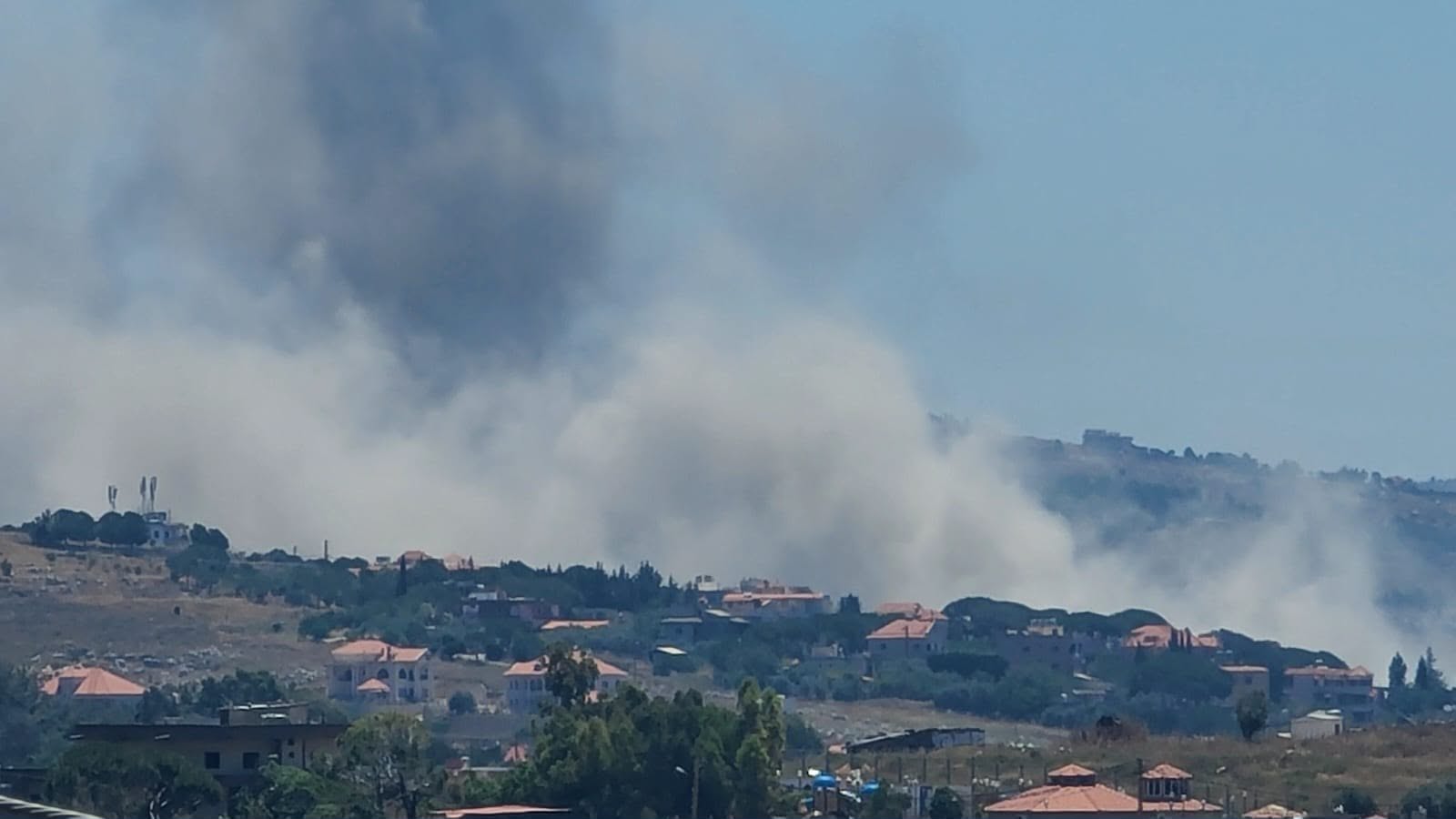
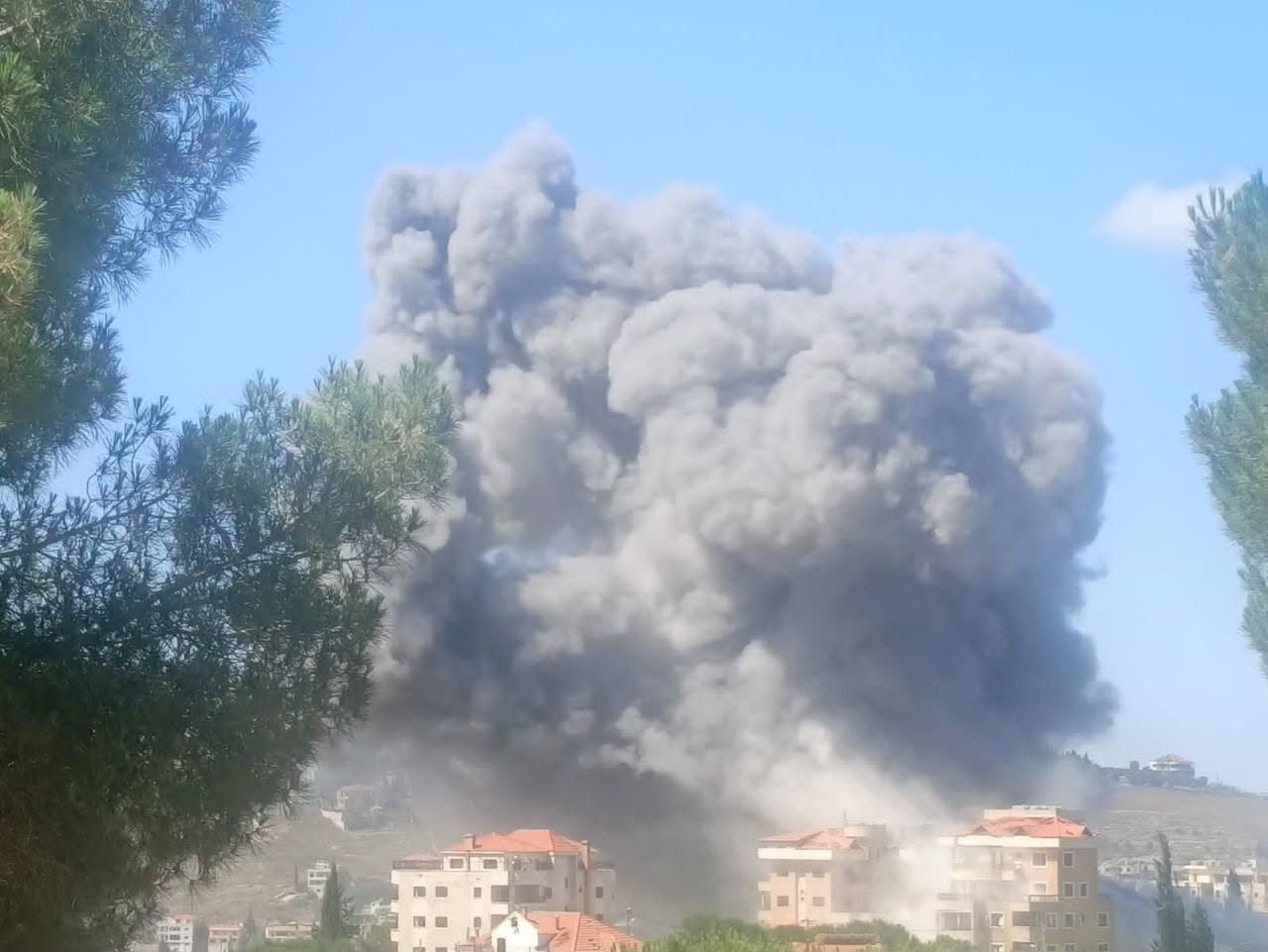
The Nabatiyah region was the epicenter of this new escalation. Lebanese and Arab media reported attacks on the city of Nabatiyeh, Kfarjouz, Kfar Rummane, Zibdine, Nabatiyeh al-Fawqa, Habbush, Sajd, Jabal al-Rafi, Kfar Tebnit and Rihan heights. The bombing also affected the university district in Nabatiyah and the al-Baydar district in Harouf. These strikes took place in a dense urban and village environment, where families still live despite the displacements caused by the war.
Several locations were targeted in the same sequence. Harouf, al-Doueir, al-Sharqiyah and Kfar Sir paid the heaviest price in the first reports. A strike on Harouf reportedly killed eight people, according to information relayed by local aid and media. Another strike targeted a house in the al-Achamiyah area between al-Sharqiyah and al-Doueir, killing several people. In Kfar Sir, an Israeli strike also caused casualties, while a drone targeted a motorcycle near the municipality of D`al-Doueir, killing one person and injuring another.
The list of bombed sites has increased over the hours. Attacks were reported on al-Qsaybeh, Kfar Dajjal, Jibchit, Adchit, Toul and the Kfarjuz-Nabatiyah area. A motorcycle was also targeted on the Abbassiyé road at the Hammadiyé junction. Artillery bombardments accompanied several air raids, including on the outskirts of Kfar Sir and d’al-Qsaybeh. Repeating strikes, sometimes on roads, have complicated the movement of ambulances and the exit of residents.
A provisional and difficult Lebanese assessment
The Lebanese Ministry of Health reported at least 18 deaths and 33 injuries in the South. He stated that the balance sheet remained provisional, with bombardments preventing the rapid evacuation of the dead and wounded. This precision is essential. In the wars of southern Lebanon, the balance sheets often evolve after several hours or even days, when the first aid workers reach the destroyed houses, search the rubble and identify the bodies.
The first available information does not make it possible to name all victims. However, an identity was made public: the Civil Defence announced the death ofMahmoud Choueib, a member of the center of D`al-Doueir, killed with family members in the strike targeting al-Sharqiyah. Its name embodies a recurring dimension of the conflict: first aid workers and emergency teams are exposed not only during interventions, but also in their own communities, sometimes with their families.
Not all other names were reliably available at the time of writing. Authorities, hospitals and municipalities usually identify them before any full announcement. In a context of continuous bombing, caution is required. Nameing a victim requires strong confirmation. The absence of a complete list does not reduce the gravity of the balance sheet. On the contrary, it shows the difficulty of documenting a day of strikes when the affected areas remain dangerous.
Habitated houses and civilian neighbourhoods affected
Local sources claimed that inhabited houses had been affected in several villages in Nabatiyeh. This information, if confirmed in all cases, enhances the humanitarian reach of the day. Strikes on houses produce heavy balances, as they often occur at night or early in the morning when families are inside. They also destroy essential goods: papers, medicines, clothing, food supplies and family souvenirs.
In Nabatiyeh, the university district and the religious district were mentioned in today’s news. These places are not simple points on a map. They refer to a city that is still trying to function in spite of strikes, displacement and fear. Daily life has already been reduced by warnings, school closures, impassable roads and service cuts. Each additional bombardment erodes the ability of the inhabitants to stay.
The situation in the villages is even more fragile. Residents who remain in the area are often elderly people, families who cannot afford to leave, or residents who come back briefly to check the condition of their homes. Strikes on roads, motorcycles and cars accentuate this feeling of circle. They turn ordinary movements into permanent risk.
Israel invokes Hezbollah, Lebanon denounces the empty agreement
The Israeli army claims to target Hezbollah fighters and infrastructure. It presents its operations as a response to ceasefire violations and attacks against its forces. On Friday, Hezbollah announced that it had ambushed an Israeli force near Ali al-Taher hill, south of Nabatiyah. The movement claimed to have destroyed three Merkava tanks with guided missiles and continued rocket and artillery clashes. Israel has confirmed the death of four of its soldiers, one of the heaviest records for its army since the last phase of escalation.
But the Lebanese debate is not limited to the military sequence. The regional agreement to cease hostilities should include Lebanon and reaffirm its territorial integrity. However, the strikes continued, evacuations were still impossible in several areas and the Israeli army refused to withdraw from certain positions. This contradiction feeds Lebanese anger. For Beirut, an agreement that does not prevent Israeli bombing or military presence in the South may become a mere diplomatic framework without protective effect.
The issue is now political as well as military. If Israel maintains an area of control in southern Lebanon and continues to strike beyond, the agreement can lose credibility in the eyes of the Lebanese. It can also strengthen actors who claim that only force can force Israel to withdraw. This scenario would weaken diplomatic efforts and make any internal discussion on the monopoly of the war decision more difficult.
Maroun al-Ras, symbol of a possible sustainable installation
The locality of Maroun al-Ras occupies a special place in Lebanese concerns. Located on a strategic height facing the border, it has already been at the heart of several military episodes. Reports of a newly established Israeli military site in the area have been received from Lebanese media in recent days. Hezbollah announced on 14 June that it had targeted the site with a rocket salve. These elements do not alone confirm the existence of a future permanent base, but they indicate at least the installation or use of an Israeli position in a Lebanese village.
It is precisely this nuance that must be stressed. It would be premature to assert, without independent material evidence, that Israel is already building a permanent base in Maroun al-Ras. On the other hand, it is established that Israeli positions are reported in the South, Israeli officials publicly refuse a complete withdrawal, and that discussions have been reported around the maintenance of troops up to ten kilometres inside Lebanese territory. For the people of the South, these facts suffice to feed the fear of prolonged occupation.
Maroun al-Ras concentrates this fear because the place has strategic and symbolic value. Any sustainable military facility would be interpreted as a fait accompli change. It could turn a war phase into a control mechanism. It would also place neighbouring villages under constant pressure. In the history of southern Lebanon, temporary positions have often produced lasting realities. It is this memory that explains the current concern.
The risk of overturning the overall settlement
The bombing of Nabatiyeh and the signs of Israeli military settlement in the South directly threaten the comprehensive settlement agreement. A regional agreement cannot hold if it leaves part of Lebanese territory under foreign military control. Nor can he convince the people if the raids continue a few days after his announcement. Peace is not only measured in the communiqués. It is true on open roads, houses spared, aid which circulates and families who can return.
From the Lebanese point of view, the continuation of the strikes could lock the country in a double impasse. On the one hand, the government is ordered to contain Hezbollah and support the settlement. On the other hand, it sees its territory bombed and occupied, which reduces its ability to defend a diplomatic line. This contradiction weakens the state at the very moment when it should be placed at the centre of the game.
The situation also offers Hezbollah a powerful political argument. The movement can present the Israeli bombings and positions as proof that the agreement does not protect Lebanon. He can claim that withdrawal will only be achieved through military pressure. This dynamic complicates any national debate on the future of weapons, as it puts occupation at the forefront.
A population caught between war, displacement and uncertainty
Friday’s bombings add to months of destruction. The inhabitants of Nabatiyah, Bint Jbeil, Marjayoun and border villages live in permanent instability. More than one million people have already been displaced since the beginning of this new phase of the conflict. Tens of thousands of homes have been damaged or destroyed. Cities and villages are not only affected in their buildings. They are in their networks, businesses, schools and social ties.
In Nabatiyah, first aid workers work in very difficult conditions. Their own headquarters had already been destroyed in a previous strike, according to press reports. Several members of the Civil Defence have been killed since the beginning of the conflict. Their exhibition gives a concrete picture of the current war: even structures supposed to save civilians do not always have a safe space.
In displaced families, the question of return becomes almost insoluble. Coming back too soon exposed to new strikes. Staying away from the village is expensive and frail for children, the elderly and workers without stable income. The promise of an agreement is no longer sufficient to reassure when the bombing continues. The inhabitants expect visible actions: stopping raids, withdrawal of troops, access to relief, repair of roads and guarantees for villages.
A test for Beirut and the mediators
Lebanon now awaits a clear political response. The authorities can denounce the strikes, apply to the United Nations and ask American, European and Arab mediators to impose compliance with the agreement. But diplomatic pressure must be concrete. Declarations of principle are not sufficient when a human balance sheet increases and military positions settle.
The mediators are also faced with a test. If they accept a lasting Israeli presence in southern Lebanon while speaking of Lebanese sovereignty, they will empty their own agreement of its substance. If they allow the strikes to continue without a control mechanism, they will give the impression that the cessation of hostilities only applies to the balance of power. This perception would be dangerous for regional stability.
The day of June 19 thus shows a tipping point. The bombing of Nabatiyeh is not just another military episode. They ask a central question: can the settlement agreement survive a de facto occupation and daily strikes against southern Lebanon? In the affected villages, the answer will depend less on the texts than on the next few hours, the balance sheets still expected and the possibility, or not, for the rescue to reach all the places hit.