

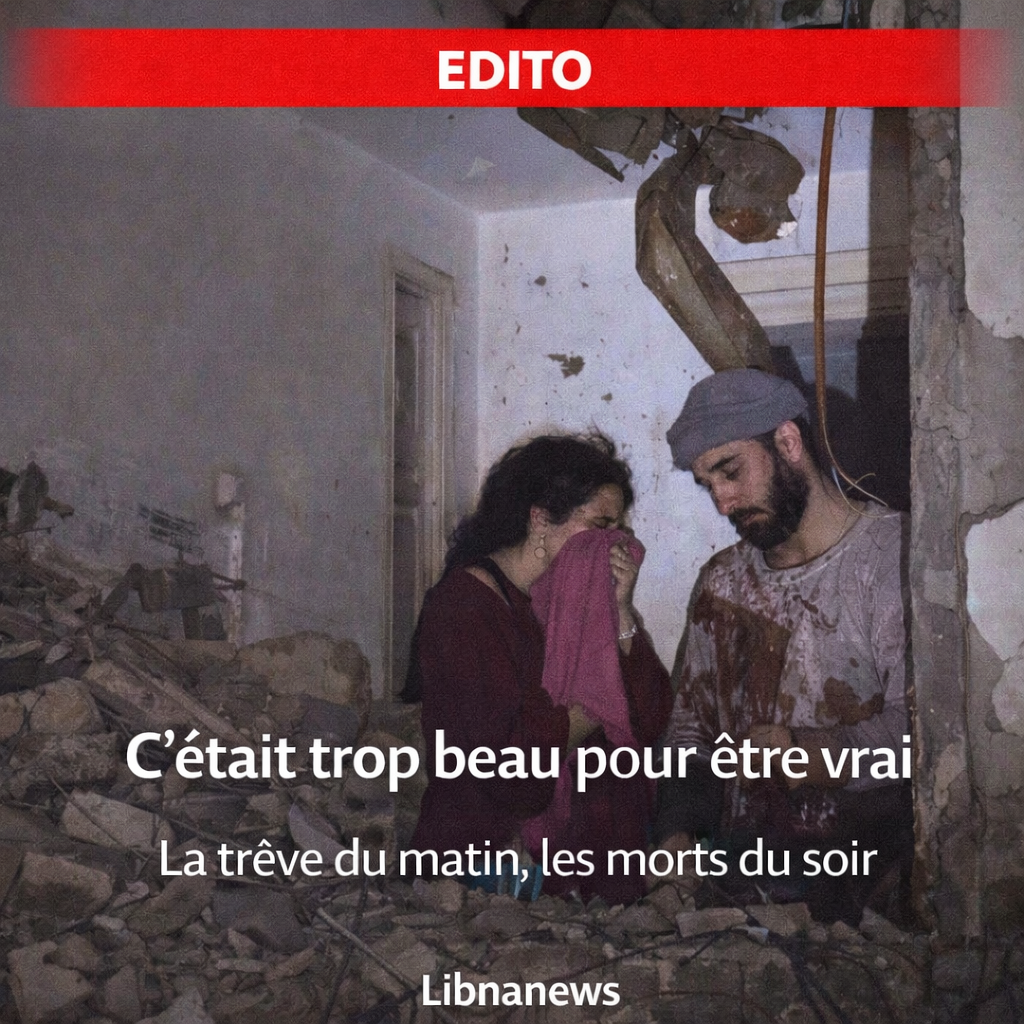
In the morning, we were sold a truce. In the evening, Lebanon already buried its dead. Between the two, there was this almost absurd moment when some wanted to believe that a ceasefire between Washington and Tehran could, by mere diplomatic magic, also protect Beirut, the southern suburbs, Saida, Tyre, Bekaa, Hermel and the southern villages. It was too good to be true. Israel continued to strike. Donald Trump suggested that Lebanon was not part of the deal. In a few hours, the country received the largest wave of bombings in this war phase.
The most cruel one on this day is not even the number of strikes. It’s mechanics. First the promise. Then the ambiguity. Then the fuzz. Then the ambulances. Then calls for blood donation. Then the relatives who turn from one hospital to another with a name on a phone and hope that it is not already written on a list. Lebanon knows this sequence by heart. He knows what this moment when diplomacy is still talking in the future means while the morgues are already going to the present.
Israel explained that it was hitting Hezbollah infrastructure. More than 100 sites, says his army. Beirut, Bekaa, South. The press release was ready, as was the justification. As always, everything is rational on paper and apocalyptic on the ground. As always, military words arrive with admirable punctuality, and civilian bodies with a slight statistical delay. We wait for the consolidated balance sheet, we refine the figures, we properly count what the bombs left in a very little administrative state.
At this time, the numbers themselves tell the chaos. The Lebanese Ministry of Health gave a provisional assessment of 112 deaths and 837 injuries. Lebanese Civil Defence reported a heavier toll of 254 dead and more than 1,129 injured. All this means one simple thing: no one seriously believes that we have finished counting. Victims are still under the rubble. Others are not yet identified. And many are still looking for their loved ones in hospitals.
There was Chmistar, with ten dead and four wounded near the cemeteries, while residents were waiting for a funeral procession. There was Beirut, the southern suburbs, Saida, Tyre, Hermel. These neighbourhoods and villages were struck almost at the same time, as if the trauma had to be extended, distributed equitably, so that no one would feel forgotten in the disaster. At this level, we are no longer even in military logic alone. One is in the pedagogy of crushing: reminding Lebanon that it can be bombed everywhere, and reminding the region that a truce can very well exist on television without existing on the ground.
The most revealing thing is that the ceasefire did not fall into a dramatic moment. He was denied a solemn announcement of his death. It has been emptied of its substance with this bureaucratic brutality which lies with the great powers and their allies: no, Lebanon is not included; No, this front continues; No, we mustn’t confuse. All right. Then you have to call things by their name. It was not a regional peace. This was not even a beginning of regional peace. It was a selective pause, a strategic breath for some, while Lebanon remained the adjustment variable.
And that’s where sarcasm becomes almost a moral obligation. We had the morning truce and the evening pits. We got careful feedback from the chancelleries and desperate calls from hospitals. We got the mediators talking about including Lebanon, and the bombs that said that it was nothing. In short, we had a perfect contemporary demonstration of what an Israeli ceasefire without Lebanon is: a pause for some, a massacre for others.
The Lebanese tragedy is also due to this repetition. This country has already seen agreements that do not really stop the war. He has already heard promises of de-escalation while violations are accumulating. He has already learned that, in the regional hierarchy of emergencies, his own survival often comes after the calculations of others. But there is something particularly sinister in the day of 8 April: it will have offered, in a few hours, the most brutal possible demonstration of the gap between diplomatic fiction and Lebanese reality.
Tonight, there’s no illusion left. Only the provisional figures, the incomplete lists, the exhausted relief workers, the families waiting, and this very Lebanese truth: when everyone talks about stability, it is always necessary to check on which side of the border falls stability, and on which side the bombs fall.




