





A new military stage in southern Lebanon
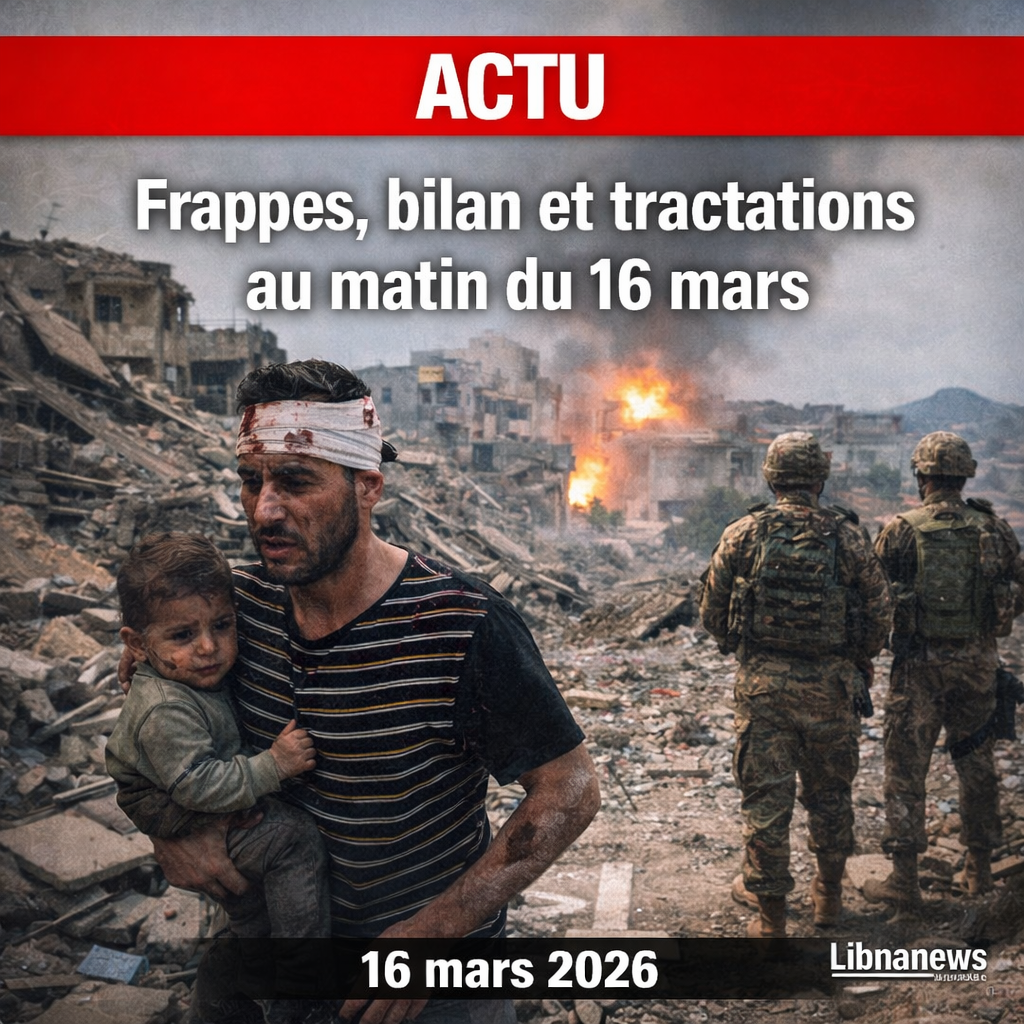
The most significant event of the night and early morning was the announcement by the Israeli army of the launch of « limited operations » of its troops against Hezbollah positions in southern Lebanon. Israel states that these actions have begun « in recent days » and presents them as a strengthening of its advanced system along the northern border. This communication formalizes an additional level of Israeli ground engagement, following several days of air strikes, artillery and evacuation orders affecting southern Lebanon and parts of Beirut.
This sequence is part of a renewed war in early March, when Hezbollah resumed firing against Israel in the context of the regional confrontation with Iran. Since then, the Israeli army has increased the number of strikes on Lebanese territory, particularly in the southern suburbs of Beirut, the south and the Bekaa. In recent days, Reuters reported heavy shelling of the capital and its surroundings, as well as the growth of Israeli forces inside southern Lebanon. The United Nations Interim Force in Lebanon has also reported Israeli penetrations inside Lebanese territory.
Bombings and human balance: what we know at this time
At 0942 hours, Reuters reported at least 850 deaths and more than 2,100 injuries since 2 March. Among those killed are more than 170 women and children, according to the same count in a report published on Sunday. Other dispatches, earlier than a few days ago, reported nearly 700 deaths and more than 800 deaths, confirming a rapid worsening of the track record over the week.
However, the overall war record must be distinguished from the strict count of the last 24 hours. On this second point, the open sources available at the time of this situation do not yet publish a single consolidated figure. The dispatches consulted were mainly used to establish the continuation of the bombings, the extension of Israeli operations to the ground and the continued deterioration of the humanitarian situation. To say more about a precise total of the dead and wounded between Sunday morning and Monday at 9:42 a.m. would at this time go beyond what is publicly confirmed.
The humanitarian crisis is growing in parallel. More than 800,000 people have been displaced in Lebanon since the beginning of this new phase of the conflict, or about 15 per cent of the country ‘ s population, according to Reuters. Collective shelters only house a fraction of the displaced, about 132,000 people, the rest being divided into cars, unfinished buildings, streets, makeshift tents and saturated homes for relatives. The rains have further aggravated the situation in the past 24 hours, particularly around Saida and Beirut, where displaced families are left without stable accommodation.
A country under pressure, between military front and civil emergency
The scale of displacement and destruction weighs on already fragile infrastructure. The World Health Organization reported, a few days earlier, that it had confirmed 25 attacks on health sites in Lebanon since the outbreak of the war, causing 16 deaths and 29 injuries. WHO also reported the closure of 49 primary care centres and five hospitals due to evacuation orders and fighting. As the strikes spread and populations descend to the north or reach Beirut, pressure on health facilities, schools transformed into reception centres and support networks increased.
Israeli evacuation orders would now cover approximately 14 per cent of Lebanese territory, according to the Norwegian Refugee Council cited by Reuters. This data gives the measure of the area affected by injunctions from, often at very short notice. In practice, this feeds a massive and rapid displacement, without sufficient reception solution. UN agencies and NGOs describe a large-scale emergency, with immediate needs for shelter, food, water, care and protection for children.
Political initiatives: between announced contacts, denials and diplomatic pressures
On the diplomatic front, Sunday was marked by contradictory signals. Reuters reported that Israeli officials said they expected the forthcoming opening of discussions between Israel and Lebanon on a lasting ceasefire and the disarmament of Hezbollah. According to this version, France would play a mediation role and Beirut would be composing its delegation, while demanding a complete ceasefire as a prerequisite. But at almost the same time, Israeli Foreign Minister Gideon Saar denied the existence of any plans for discussions with the Lebanese government. On the Lebanese side, officials cited by Reuters claimed that they had not received a formal notification.
In other words, on the morning of 16 March there is much information about planned preparations or contacts, but no public confirmation of a formal mechanism already in place. The name of Ron Dermer, close to Benyamin Netanyahu, goes back to the information published on the Israeli pilotage of this file. France is mentioned as a possible mediator. At the same time, the Lebanese position reported by Reuters remains clear: no negotiation without prior cessation of hostilities.
Other capitals have sought to weigh. On Sunday, London announced over £5 million in emergency humanitarian assistance to Lebanon, including the Lebanese Red Cross, the United Nations humanitarian fund in Lebanon and the World Food Programme. The head of British diplomacy said she supported the efforts of the Lebanese government and the Lebanese army, while condemning Hezbollah’s attacks on Israel. This announcement is both a matter of immediate assistance and a political signal to Beirut at a time of great fragility.
Emmanuel Macron, on Sunday, asked Iranian President Massoud Pezeshkian to stop regional attacks, whether direct or carried out by relays in Iraq or Lebanon, and to restore freedom of navigation in the Strait of Ormuz. The French President also called for a new regional political and security framework. At the same time, Pope Leo denounced the « atrocious violence » of the war and called for a ceasefire, explicitly mentioning Lebanon as a source of concern.
What has happened in Israel in the last few hours
On the Israeli side, the focus is on continuing operations against Hezbollah and the country’s ability to sustain. Gideon Saar rejected reports of a shortage of missile interceptors. An Israeli military official quoted by Reuters assured that the army remained prepared for a prolonged war. According to Reuters’ Institute for National Security Studies, Iran has launched nearly 300 ballistic missiles and hundreds of drones since late February. In this context, Israel seeks to show operational continuity despite the simultaneous opening of several fronts.
The latest AP and Reuters dispatches also show that Israel continues its strikes beyond the Lebanese theatre alone, as part of the regional confrontation with Iran. AP reported on Monday that further attacks had targeted Beirut and Tehran, while Israeli defence systems continued to be called upon to deal with Iranian forces. Within Israel, the authorities are making public efforts to reassure the endurance of the military apparatus and the absence of a major break in air defence.
What happened in Iran in the last 24 hours
In Iran, Sunday was marked by a double message: military firmness and internal hardening. Reuters reported that Iranian police announced the arrest of 500 people accused of providing information to the « enemy », particularly to Israel and the United States. The Iranian authorities are talking about an effort to cut off the supposed intelligence networks that would facilitate foreign strikes. This campaign of arrests affects several parts of the country, in a context of open war and intense internal political tension.
At the diplomatic level, Iran’s ambassador to Saudi Arabia told Reuters that relations between Tehran and the Gulf monarchies should be « responsible for serious scrutiny ». He denied Iranian involvement in some attacks on Saudi oil facilities, while arguing that Iran was only targeting American and Israeli interests. At the same time, Tehran maintains a line of refusal in the face of Western and American pressure for an immediate ceasefire under conditions demanded by Washington.
The war also continues to increase the human balance on Iranian territory. Reuters had already reported, as early as 6 March, that the Iranian ambassador to the United Nations had reported at least 1,332 civilians killed in Iran since the beginning of the war. Other more recent sources, such as AP, refer to an Iranian total of over 1,300 deaths. This figure is not a record of the last 24 hours, but it recalls the intensity of the strikes and their human cost on a regional scale.
The rest of the Middle East: Ormuz, Gulf and disturbed air traffic
Beyond Lebanon, the last 24 hours have been dominated by the regional repercussions of the war with Iran. In Dubai, the international airport began on Monday to gradually resume its flights after a drone attack that caused a nearby fire. Reuters stresses that this is a new episode of the Iranian campaign against Gulf infrastructure since the beginning of the war, with immediate effects on air traffic, regional security and energy markets. No injuries were reported in this specific episode, but the temporary closure of a global air hub illustrates the extent of the conflict.
The Strait of Ormuz remains at the centre of concern. Donald Trump has called on other countries to help secure this vital seaway, while the International Energy Agency has announced that more than 400 million barrels of emergency stocks will be made available to try to cushion the shock in the markets. Reuters recalls that about 20% of the world’s oil and gas transit through this area. In this context, the military crisis is very clearly beyond the Lebanese question: it already weighs on civil aviation, commercial shipping and energy prices.