

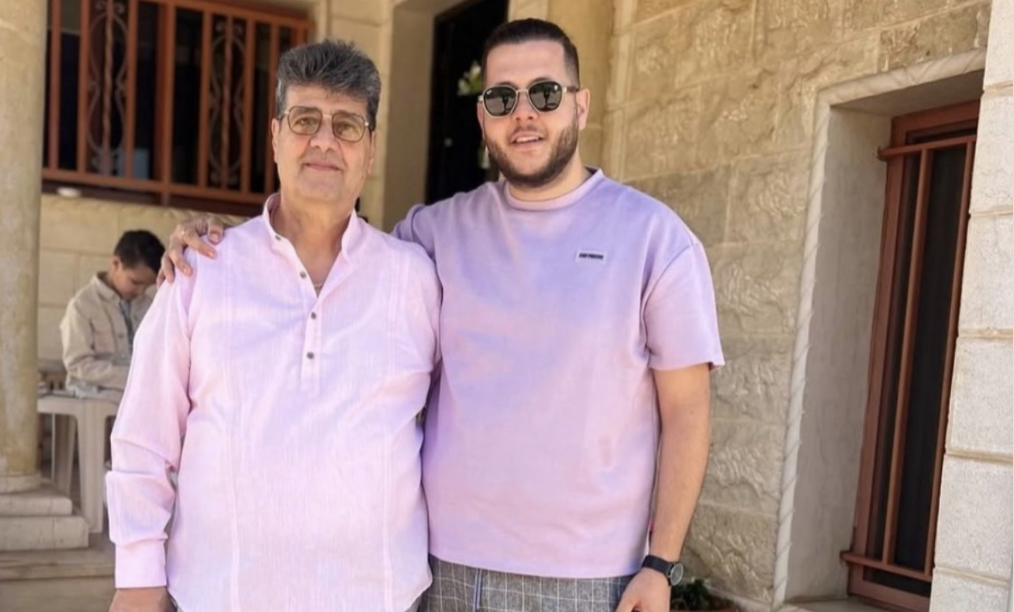
On Saturday, 28 March, South Lebanon again turned into a series of violence that now strikes indiscriminately journalists, relief workers and civilians travelling on border roads. In the al-Uwaynat area, between Rmeish and Debel, heavy Israeli fire targeted a civilian car, resulting in the immediate death of two occupants, a father and his son, according to reports relayed by Lebanese media from the National Information Agency. The victims were identified as Georges Said and his son Elijah, both from Debel, a Christian locality in the border sector. The first available evidence did not at this time mention a detailed version of the Israeli army on this specific attack.
The episode is part of a particularly heavy day in the South Lebanon. A few hours earlier, a strike on a press vehicle near Jezzine had already cost the lives of at least two Lebanese journalists, according to several media and a news agency dispatch. At the same time, fighting and strikes continued in several southern localities, while Israel was increasing its ground and air pressure in a campaign to push its grip to the Litani. The death of Georges Said and his son Elijah was therefore not an isolated incident on a secondary road. It occurs in a sequence where civilian traffic itself becomes a fatal risk in areas under permanent fire control.
What we know at this time about the attack between Rmeish and Debel
The strongest elements converge on a central point: the car was targeted in the area of d’al-Uwaynat, between Rmeish and Debel, and the two men who were there were killed instantly.An-Naharciting the National Information Agency, reports that the Israeli army opened fire « in abundance » on a civilian vehicle in this area.Independent Arabiaadded that the two victims were Georges Said and his son Elijah, from Debel. Both sources agree on the general location, the civilian nature of the vehicle and the relationship between the victims.
At this stage, however, several shade zones remain. The reports published in the early hours do not yet detail the exact direction of travel, the reason for the vehicle’s presence on this axis or the possible existence of other injuries or direct witnesses on board. The same sources also did not indicate, at the time of publication, whether the attack was a ground fire, a shot from an advanced position or another targeting sequence. In a war where balance sheets and specific circumstances often change over time, this factual prudence remains indispensable. But she does not erase the immediate observation: two civilians, a father and her son, were killed on a road in southern Lebanon while they were in a civilian car.
Debel and Rmeish, two Christian localities caught in climbing
The political and symbolic significance of this attack also lies in the place. Debel and Rmeish belong to this arc of Christian border villages which, since the beginning of the clashes, lived in a form in between: close to the front, exposed to military movements and strikes, but long perceived by a part of their inhabitants as less directly targeted than other southern bastions. This impression has clearly eroded over the past few weeks.Independent Arabiapoints out that Georges Said and his son Elijah came from Debel, presented as a Christian locality. At the same time, the Associated Press continued to report on Friday that people living in Christian neighbourhoods and localities in the South were hoping to be relatively spared because of their neutrality, a hope increasingly weakened by events.
This shift is not new. On 9 March, Maronite priest Peter al-Rahi had already been killed in the Christian village of Qlayaa, also close to the border. The episode had aroused a strong emotion, because it demonstrated that Christian border villages were no longer on the margins of military violence. Today’s death of a father and his son between Rmeish and Debel reinforces this sense of rupture: the distinction between directly militarized areas and supposedly more protected civilian spaces continues to disappear.
A border road that has become a space of war
The attack took place in a context where roads in southern Lebanon became one of the central issues of the Israeli campaign. Reuters reported on Friday that Israel is now seeking to separate the South from the rest of the country and establish a buffer zone to Litani. With this in mind, roads, bridges, secondary axes and vehicles that use them take on new strategic importance. This in itself is not enough to explain or justify the targeting of a civilian car. On the other hand, this helps to understand why areas such as Rmeish-Debel have become extremely dangerous, including for non-combat residents.
For several days, the destruction of infrastructure and evacuation orders have added to this pressure. TheWall Street JournalIt was reported on Saturday that Israel had issued new evacuation warnings for seven localities and villages in southern Lebanon, asking the inhabitants to head north of the Zahrani. Even when a locality is not directly targeted by a formal evacuation order, the proliferation of fire zones and military advances makes civilian displacement increasingly dangerous. The death of Georges Saïd and Élie Saïd illustrates this brutal reality: on certain axes, the mere fact of driving is now assimilated to a direct exposure to war.
A day when civilians paid the price again
The drama between Rmeish and Debel cannot be separated from the rest of the day. On Saturday morning, several media outlets reported new strikes on ambulances and rescue teams in the Nabatiyah area. At the same time, the deadly strike against journalists south of Jezzine reminded that the most visible civilian professions — caregivers, first aid workers, reporters — are among the most exposed in this war sequence. The death of a father and his son on a border road completes this picture: violence is no longer limited to front lines in the strict sense. It overflows on the most ordinary roads, vehicles and movements.
This extension of danger particularly affects the Christian, Shiite or mixed South Lebanon as the Israeli campaign becomes territorial. The Associated Press on Friday described the city of Tyre emptied of a large part of its inhabitants, with more than one million displaced people nationwide and a sense of abandonment that is gaining even in the localities where some were still hoping to be spared. The death of Christian civilians between Rmeish and Debel is part of this broader dynamic: the South is no longer a mere scene of confrontation between Israel and Hezbollah, but a space where the border between fighters, exposed professionals and ordinary civilians becomes more fragile every day.






