

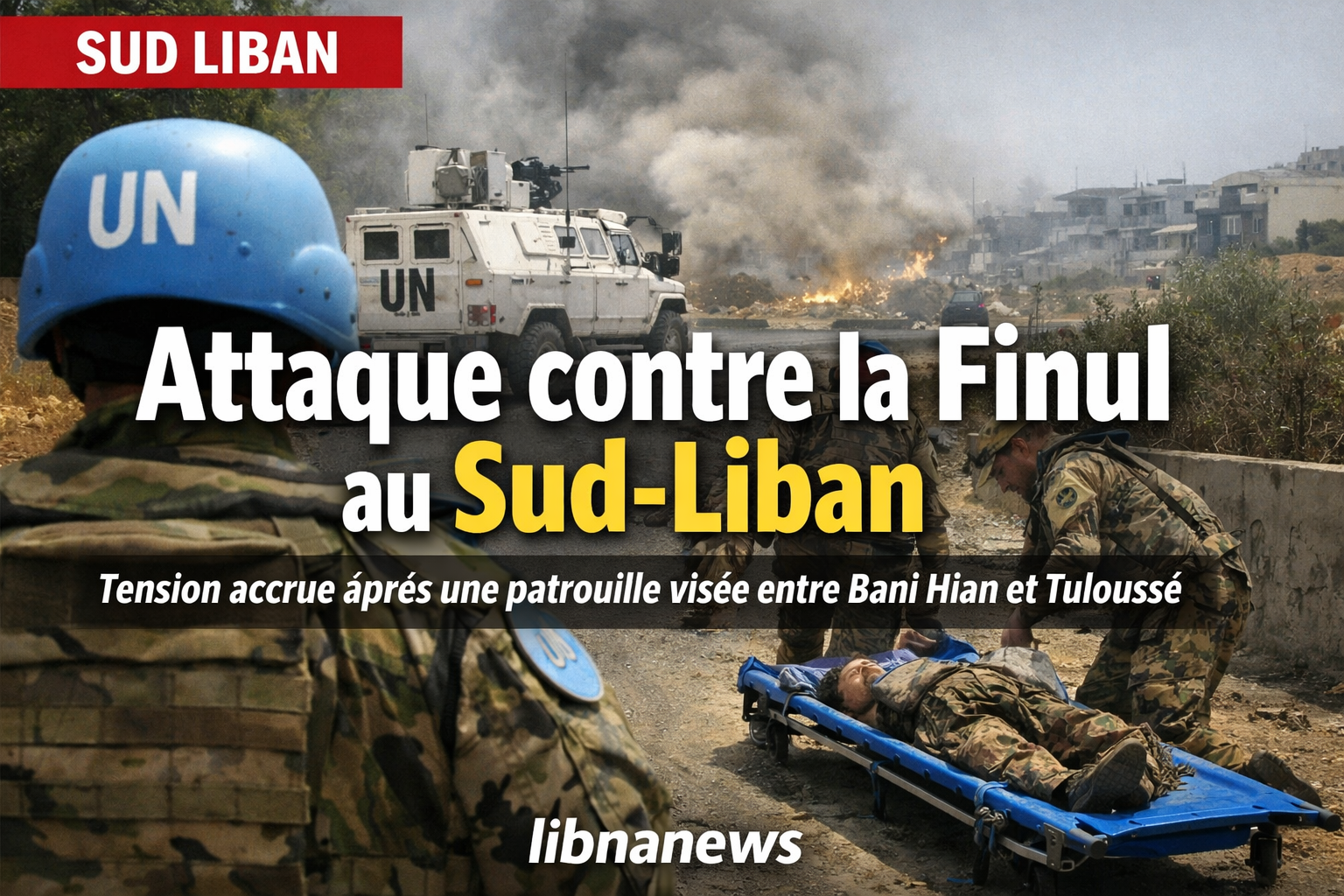
A further reported attack on a Finul patrol further increases tension in southern Lebanon. According to reports from the field this morning, a patrol of the international peacekeeping forces was directly targeted on the general road betweenBani HianandTulouswith reports of injuries among its members. At this time, I did not find any public dispatch of theNNAor a detailed statement of theFinishFormally confirming this specific incident, which requires careful formulation of the balance sheet and the exact circumstances.
This alleged episode occurs in an already extremely heavy context for the UN mission. During the night of Sunday to Monday, the Finul announced that a projectile had exploded near one of its positions atAdshit al-Qusayrin southern Lebanon, killing one Blue Helmet and seriously injuring another. Jakarta then confirmed that the killed soldier wasIndonesiaand indicated thatthree other membersThe contingent had also been injured by indirect artillery fire in the vicinity. The Finul stated that it was not yet aware of the origin of the projectile and that an investigation had been initiated.
The essential point for your article is therefore the following:Bani Hian – Tuloussédoes not occur in isolation. It is part of a sequence where Finul has already paid a heavy price in less than 24 hours, withone deadin his ranks and several wounded. This chronology mechanically reinforces the political and military gravity of any new attacks reported against a UN patrol, even before full confirmation of all details.
The area concerned is also covered by theSector Eastthe Finul, whose headquarters are located atMarjayounand is placed underSpanish Command. Official publications of the Mission also show a presence ofFinnish quotain Bani Hian, while older documents from the Finul associateBani Hayyan/Tallousathe perimeter of the Indonesian battalion. This does not provide a reliable identification of the nationality of the patrol targeted this morning, but it provides a credible framework for the contingents active in that area.
Diplomaticly, the repetition of these incidents further weakens the United Nations presence in southern Lebanon. On 16 March, France had already condemned shots against soldiers from the Finul, calling them unacceptable. The increasing number of attacks, firings and injuries among peacekeepers has become a broader issue: the mission’s real ability to continue to circulate and fulfil its stabilization role on a ground where even international forces no longer appear to be sheltered.






