

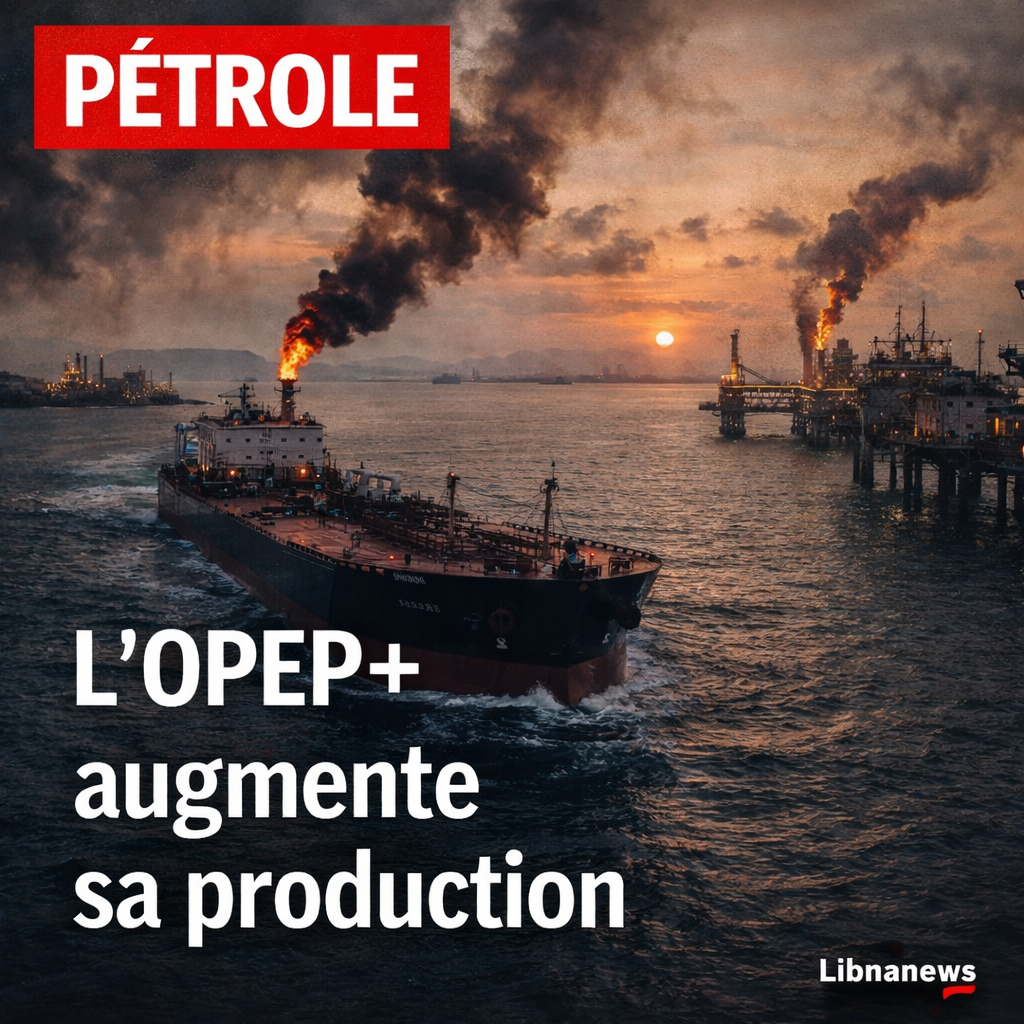
Eight OPEC+ countries announced an increase of 206 000 barrels per day from May 2026. On paper, the decision marks a new stage in the relaxation of voluntary cuts initiated since 2023. But in the current context, dominated by the war around Iran and the disturbances in the Strait of Ormuz, this increase appears above all as a political signal to the markets.
Eight members of the alliance, namelySaudi Arabia, Russia, Iraq, Kuwait, Kazakhstan, Algeria, Oman and the United Arab EmiratesThis decision was adopted at a virtual meeting on the state of the world oil market and its prospects. In their communiqué, these countries reaffirmed their common commitment to support market stability and to continue the gradual adjustment of the additional voluntary reductions announced in 2023.
In detail, the increase in206 000 barrels per dayin the context of the wider1.65 million barrels per dayadditional voluntary reductions announced in April 2023. The organisation states that this overall volume can be reintroduced partly or totally into the market, gradually, depending on the evolution of global conditions.
But the immediate scope of this announcement must be put into perspective. For several days now, the oil market has been shaken by the war around Iran and the disruptions in the Strait of Ormuz, which is essential for Gulf oil exports. Reuters points out that this crisis has severely reduced the crude flows of several key producers and pushed prices to levels that have been unprecedented for several years. Under these conditions, the increase announced by OPEC+ remains for the moment largely theoretical, as several countries do not have the logistical capacity to rapidly increase their deliveries as long as maritime routes remain under pressure.
The announcement therefore has a strategic dimension. It allows OPEC+ to show that it remains ready to act on global supply, even in a phase of strong geopolitical instability. It also sends a message to large consumers: the alliance wants to appear as a stabilizing factor, even though military tensions, damage to certain regional energy infrastructures and uncertainties about Ormuz have a strong nervousness in the markets.
In other words, the decision is not neutral, but it alone will not be enough to relax the market sustainably. As long as the conditions of transport in the Gulf continue to deteriorate, the increase in production decided for May may remain at a higher risk ofdisplayed capacitya volume actually injected into world trade. The next meeting of the alliance will therefore be closely monitored, while the operators are mainly interested in knowing whether Gulf exports will return to a more normal pace in the coming weeks.






